

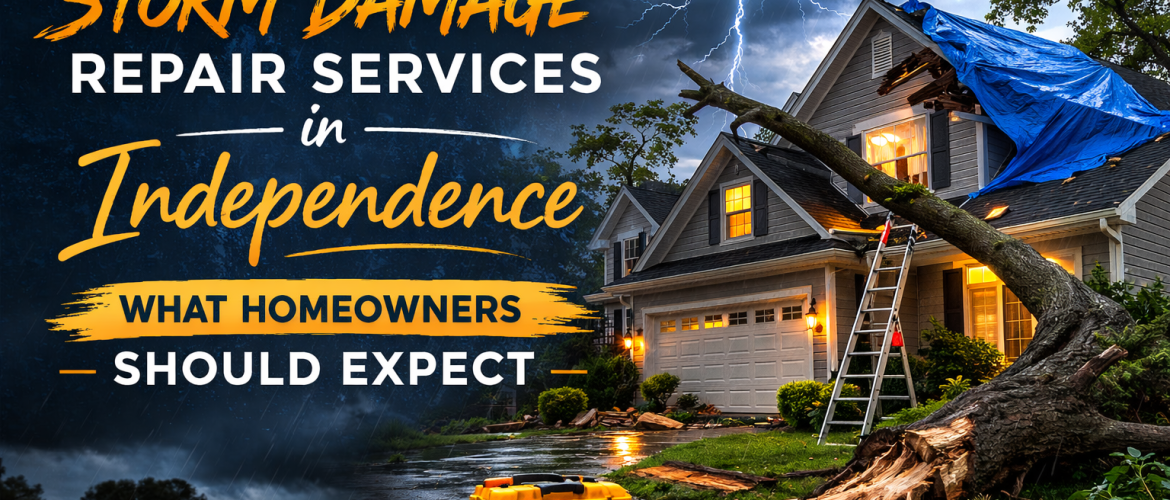
Storms can cause significant damage to homes in a matter of minutes. High winds, heavy rain, hail, and falling debris can weaken roofs, siding, gutters, and other structural elements. For homeowners in Independence, understanding how storm damage repair services work can make the recovery process much smoother. Acting quickly and working with experienced professionals helps prevent further damage and protects the long term value of your home.
This guide explains what homeowners should expect from storm damage repair services in Independence, from the initial inspection to the final restoration.
Understanding Storm Damage and Its Impact
Storm damage can appear in many forms, and not all problems are immediately visible. Severe weather events may damage roofing materials, loosen shingles, create leaks, or cause structural issues that worsen over time if ignored.
Some of the most common types of storm damage include:
- Missing or lifted shingles from strong winds
- Hail dents on shingles, vents, and flashing
- Water leaks caused by damaged roofing materials
- Fallen branches or debris impacting the roof
- Clogged or broken gutters
- Structural damage to siding or fascia
Even minor damage can develop into serious issues if left unrepaired. Moisture intrusion, mold growth, and insulation problems can follow if water enters the home.
The First Step: Professional Roof Inspection
After a storm passes, the first step in the repair process is a professional inspection. A trained roofing contractor will carefully evaluate the roof and exterior of your home to identify visible and hidden damage.
What an Inspection Typically Includes
- Checking shingles for cracks, lifting, or loss
- Examining flashing around chimneys and vents
- Inspecting gutters and downspouts
- Looking for signs of water intrusion inside the attic
- Identifying structural weaknesses or sagging areas
A detailed inspection provides homeowners with a clear picture of the damage and helps determine whether repairs or a full replacement is necessary.
Emergency Repairs to Prevent Further Damage
In some cases, storm damage requires immediate attention to prevent the situation from getting worse. Emergency repairs are often performed before permanent repairs begin.
Common Emergency Services
- Temporary roof tarping
- Removing dangerous debris
- Sealing exposed areas to prevent leaks
- Stabilizing damaged structures
These quick actions help protect the interior of the home while a long term repair plan is created.
Insurance Claim Assistance
Storm damage repairs often involve homeowner insurance claims. Navigating the claims process can be stressful, especially when homeowners are unsure what documentation is required.
Reputable storm repair companies assist homeowners by:
- Documenting the damage with photos and reports
- Providing written repair estimates
- Communicating with insurance adjusters
- Explaining coverage details and repair options
This support helps ensure that the claim process moves smoothly and that homeowners receive fair compensation for repairs.
Repair vs Replacement: What Determines the Right Solution
One of the biggest questions homeowners face after storm damage is whether repairs are enough or if a full roof replacement is needed.
When Repairs Are Usually Sufficient
Repairs may be recommended when:
- Damage is limited to a small area
- The roof is relatively new
- Structural components remain intact
When Replacement May Be Necessary
A full roof replacement might be required if:
- Large sections of shingles are missing
- There is widespread hail damage
- The roof is nearing the end of its lifespan
- Structural issues are discovered
Professional contractors help homeowners evaluate these options so they can choose the most cost effective and durable solution.
Choosing the Right Storm Damage Repair Contractor
Selecting the right contractor plays a major role in the quality of the repair work. Homeowners should look for licensed, insured, and experienced roofing professionals with strong local reputations.
Important Factors to Consider
- Proper licensing and insurance
- Experience with storm damage repairs
- Positive customer reviews
- Clear estimates and communication
- Warranty options for labor and materials
Edgewood Kentucky Roofing Company stands out by putting customer education first. They walk you through every option so you feel confident in your investment, whether you’re patching up or starting from scratch. Working with a trusted provider like Edgewood Kentucky Roofing Company ensures homeowners receive reliable guidance and high quality repair services.
The Storm Damage Repair Process
Once a repair plan is approved, the restoration process typically follows several important steps.
1. Damage Assessment
The contractor reviews inspection findings and prepares a detailed repair plan.
2. Material Selection
Homeowners choose roofing materials that match their home and budget.
3. Repair or Replacement Work
The roofing crew performs the necessary repairs, replaces damaged sections, and reinforces structural components if needed.
4. Final Inspection
After work is completed, the contractor performs a final inspection to ensure everything meets safety and quality standards.
This structured process helps guarantee that repairs are completed correctly and that the roof can withstand future storms.
Preventing Future Storm Damage
While storms cannot be avoided, homeowners can take steps to reduce the risk of serious damage in the future.
Preventative Maintenance Tips
- Schedule regular roof inspections
- Clean gutters and downspouts frequently
- Trim tree branches near the roof
- Replace worn or aging roofing materials
- Ensure proper attic ventilation
Routine maintenance improves the durability of the roofing system and can extend its lifespan significantly.
FAQs
How soon should I inspect my roof after a storm?
It is best to schedule a professional inspection as soon as possible after a severe storm. Early inspections help detect hidden damage before it leads to leaks or structural issues.
Will homeowners insurance cover storm damage repairs?
Most homeowner insurance policies cover storm related damage caused by wind, hail, or falling debris. Coverage varies by policy, so reviewing your policy details is important.
How long do storm damage repairs usually take?
Minor repairs may take only a few hours, while larger projects or full roof replacements may take several days depending on the size of the home and the extent of the damage.
What signs indicate storm damage to a roof?
Common signs include missing shingles, dents from hail, water stains on ceilings, loose flashing, and debris on the roof.
Should I attempt storm damage repairs myself?
It is not recommended. Roof repairs require proper safety equipment and expertise. Professional contractors ensure repairs are done safely and correctly.
Conclusion
Storm damage can be stressful for homeowners, but understanding the repair process helps make recovery easier. From professional inspections to insurance support and high quality repairs, experienced contractors guide homeowners through every stage of restoration.
Addressing damage quickly protects the structural integrity of the home and prevents more expensive problems in the future. By working with trusted professionals and maintaining the roof regularly, homeowners in Independence can keep their homes safe and resilient against future storms.
