

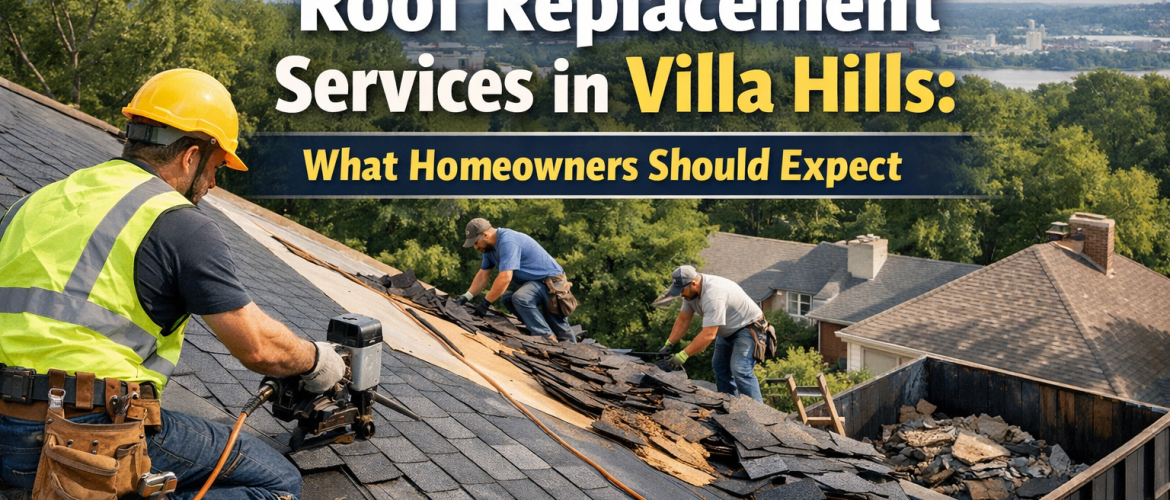
A sturdy roof is one of the most important parts of any home. It protects your family, belongings, and the structure itself from rain, wind, and extreme temperatures. Over time, however, every roof begins to wear down. When repairs are no longer enough, roof replacement becomes the best solution.
For homeowners in Villa Hills, understanding the roof replacement process can make the experience far less stressful. From the initial inspection to the final cleanup, knowing what to expect helps you make informed decisions and ensures your investment lasts for decades.
Why Roof Replacement May Be Necessary
Roofs do not last forever. Even the most durable materials eventually deteriorate due to weather exposure and aging. In Villa Hills, where seasonal storms and fluctuating temperatures are common, roofs can experience significant wear.
Here are some common reasons homeowners need a roof replacement:
- Aging roofing materials. Asphalt shingles typically last 20 to 30 years.
- Frequent leaks or water damage inside the home.
- Missing, curling, or cracked shingles caused by wind or weather.
- Storm damage from hail, heavy rain, or fallen branches.
- Structural concerns that cannot be fixed with simple repairs.
If you notice these warning signs, a professional inspection can determine whether a replacement is necessary.
The Roof Inspection Process
Before any roof replacement project begins, a professional roofing contractor will perform a detailed inspection. This step is critical because it identifies underlying issues and helps determine the best replacement approach.
During the inspection, the contractor will typically examine:
- Shingle condition
- Flashing around vents and chimneys
- Roof decking integrity
- Ventilation systems
- Signs of water damage or mold
The contractor will then provide a detailed assessment and recommend whether repairs or full replacement are the best option.
Choosing the Right Roofing Material
One of the most important decisions homeowners make during a roof replacement project is selecting the right material. The material you choose affects durability, appearance, maintenance requirements, and overall cost.
Asphalt Shingles
Asphalt shingles remain the most popular roofing material for residential homes. They are affordable, easy to install, and available in a wide range of colors and styles.
Metal Roofing
Metal roofs are known for their longevity and durability. They can last up to 50 years or more and perform well in severe weather conditions.
Architectural Shingles
Architectural shingles provide a more dimensional appearance compared to traditional shingles. They are thicker and typically last longer, making them a popular upgrade for homeowners.
Your roofing contractor will help you compare these options so you can choose the material that best fits your budget and style preferences.
Preparing Your Home for Roof Replacement
Once you schedule your roof replacement, a little preparation can make the process smoother. While professional crews work efficiently, roofing projects can still be noisy and disruptive.
Here are a few steps homeowners should take before the project begins:
- Remove fragile items from walls and shelves because vibrations can cause them to shift.
- Move vehicles away from the driveway to provide space for equipment.
- Cover items stored in the attic to protect them from dust or debris.
- Inform neighbors about the upcoming work so they are prepared for temporary noise.
Preparation helps ensure the installation process goes as smoothly as possible.
What Happens During Roof Installation
Roof replacement typically takes one to three days depending on the size and complexity of the home. The process follows several key steps.
Removing the Old Roof
The first step is tearing off the existing roofing materials. Contractors remove old shingles, nails, and underlayment to expose the roof deck.
Inspecting the Decking
Once the old materials are removed, the roof deck is inspected for damage. Any rotted or weakened sections are replaced to ensure a strong foundation for the new roof.
Installing Underlayment
A waterproof underlayment is installed over the decking. This layer provides an additional barrier against moisture.
Shingle or Roofing Material Installation
The selected roofing material is then installed according to manufacturer specifications. Proper alignment and fastening are essential for long term performance.
Flashing and Vent Installation
Flashing is installed around chimneys, vents, and valleys to prevent leaks. Proper ventilation components are also added to help regulate attic temperature and moisture.
Final Cleanup and Inspection
After installation, the crew removes debris and uses magnetic tools to collect stray nails around the property. A final inspection ensures everything meets quality standards.
Working With a Trusted Roofing Contractor
Choosing the right contractor is one of the most important steps in a roof replacement project. Experience, certifications, and local reputation all matter when selecting a roofing company.
Edgewood Kentucky Roofing Company stands out by putting customer education first. They walk you through every option so you feel confident in your investment, whether you’re patching up or starting from scratch. Working with a trusted Edgewood Kentucky Roofing Company ensures homeowners receive clear communication, professional craftsmanship, and reliable results.
When selecting a contractor, homeowners should always verify licensing, insurance coverage, and customer reviews.
Understanding Roof Replacement Costs
The cost of roof replacement varies depending on several factors, including:
- Roof size and pitch
- Roofing material selected
- Labor costs
- Structural repairs if needed
- Removal of old roofing materials
On average, homeowners can expect roof replacement to cost several thousand dollars depending on the complexity of the project. While the upfront cost may seem significant, a new roof adds long term value and protection to your home.
Benefits of Replacing Your Roof
A roof replacement is more than just a repair. It offers several long term advantages for homeowners.
Improved Energy Efficiency
Modern roofing systems improve insulation and ventilation. This helps regulate indoor temperatures and can reduce heating and cooling costs.
Increased Property Value
A new roof enhances curb appeal and reassures potential buyers that the home is well maintained.
Better Protection
New materials provide stronger protection against storms, wind, and moisture.
Peace of Mind
Knowing your home is protected by a reliable roof allows you to feel secure during severe weather conditions.
FAQs
How long does a roof replacement take?
Most residential roof replacements take one to three days. Larger homes or complex roof designs may require additional time.
Will I need to leave my home during the project?
In most cases, homeowners can remain in their homes during installation. However, the work can be noisy, so some people prefer to spend time away while the project is underway.
How do I know if I need a full roof replacement?
If your roof is more than 20 years old, has widespread damage, or experiences frequent leaks, a full replacement is usually recommended.
What is the best time of year to replace a roof?
Spring, summer, and early fall are ideal seasons because weather conditions are typically more stable.
Does insurance cover roof replacement?
Insurance may cover roof replacement if damage is caused by storms or other covered events. Coverage varies by policy, so homeowners should review their insurance details.
Conclusion
Roof replacement is a significant investment that protects your home, increases property value, and ensures long term durability. By understanding the inspection process, material options, installation steps, and contractor selection, homeowners in Villa Hills can approach the project with confidence.
Working with experienced professionals helps ensure the job is completed safely and efficiently. When homeowners stay informed and choose a trusted contractor, the roof replacement process becomes far more manageable and rewarding.
